
Blog
Kapok: Nature’s Lightweight Fiber for a More Sustainable Textile

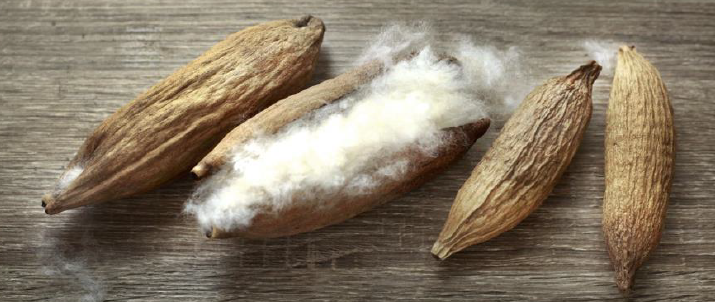
Kapok is a natural fiber obtained from the seed pods of the Ceiba pentandra tree, a tropical species native to Central and South America and now widely grown across Southeast Asia and Africa. Traditionally used to fill mattresses, pillows and life jackets, kapok is now gaining attention as the textile industry is searching for more sustainable, high-performance materials.
A Unique Natural Fiber
Kapok is often described as one of the lightest natural fibers in the world. Its hollow structure contains around 70–80% air, making it remarkably lightweight while also providing excellent thermal and acoustic insulation. The fiber is soft, silky to touch and hypoallergenic, offering a high level of comfort in textile applications.
Unlike other conventional fibers, kapok is naturally water-repellent due to a thin waxy coating on its surface. At the same time, it is fully plant-based, biodegradable and produced without the need for pesticides. These characteristics make kapok an attractive alternative to synthetic fibers in textile applications.

A Naturally Sustainable Resource
Kapok trees require very few agricultural inputs. In most producing regions, they grow without irrigation, fertilizers or pesticides, reducing both water consumption and chemical use compared with many conventional fiber crops.
Kapok trees can be integrated into regenerative agroforestry systems, where they contribute to soil protection, biodiversity and erosion control while supporting long-term land management. In addition, mature kapok trees are highly effective at storing carbon, making them valuable contributors to climate change mitigation.
Since the fiber is harvested from naturally produced seed pods rather than from an annual crop, it does not compete directly with food production and represents an efficient use of natural resources.
Kapok in Modern Textiles
Advances in spinning technology have made it possible to blend kapok with cotton and other cellulosic fibers. These yarns combine the softness and moisture absorption of cotton with the lightness, breathability and thermal properties of kapok, resulting in fabrics that dry faster and perform well across different climates.
Kapok yarns are suitable for home textiles, lightweight apparel, knitwear, and technical applications where lightweight performance and reduced environmental impact are increasingly valued.

Kapok and the Future of Sustainable Fibers
As the need for renewable materials and responsible sourcing is being prioritized, kapok offers a compelling natural alternative to synthetic fibers. Its combination of comfort, performance and environmental benefits aligns with the growing demand for textiles that are both functional and sustainable.
Intercot develops innovative yarns that combine kapok with other natural fibers, like cotton, creating materials tailored to the requirements of modern textile applications. By carefully balancing fiber composition, these blends deliver lightweight, breathable and durable fabrics while contributing to more responsible textile production.
Source: Flocus (2025). What is kapok ? www.flocus.pro


